



 Facebook
 Reddit
This is incomprehensible.
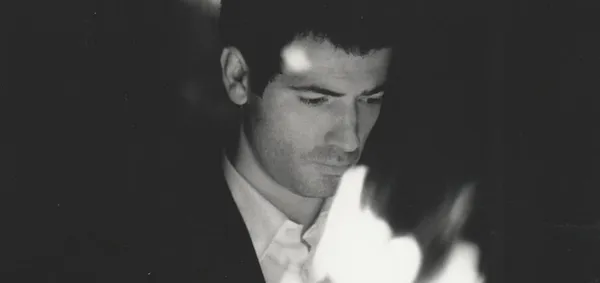
The first half is in black-and-white, the second half in colour. The first half is very dark, shot mostly at night, in the streets, or in poorly lit apartments. The second half is very bright, with fierce primary colours and a purple helicopter.
 There is no discernible storyline. At one moment, girls are being auditioned for a part in a film. At another, connoisseurs discuss art and life. A man reads from a book with empty pages. Someone says, "What are you talking about?" Someone else answers, "Nothing. It's history."
There are a number of old people dotted about. They talk of the war. A voice says, "There can be no resistance without memory."
You have no idea who anybody is, or what they are doing. A man you have seen before, possibly the reader of the blank book, appears later in the second half, which is, you are told, two years before the action of the first half. He says he is researching the Resistance.
The camera is handheld, occasionally out-of-focus. The images are strong, even interesting, at times. Mostly, they are not. Words flow through this arbitrary place like rivers of confusion: "Every desire must meet its latitude."
Eloge De L'Amour has been called "a rigorously structured philosophical meditation on love, ageing, and, above all, the role of language and memory in shaping human consciousness, past and present." Possibly, with patience and at least 15 viewings, intellectual slivers might be gleaned from these kaleidoscopic flashes. Life is too short.
Granddad of Le Nouvelle Vague, Jean-Luc Godard continues to baffle the faithful with his games of hide-and-seek. A Bout De Souffle looks like Hollywood mainstream compared to this. At least, he hasn't compromised.
Is that good?
Reviewed on: 06 Dec 2001

If you like this, try:
Review preview for Inland Empire
Imagery and sound are so closely wedded throughout that at times it seems meaningless to distinguish between the two.